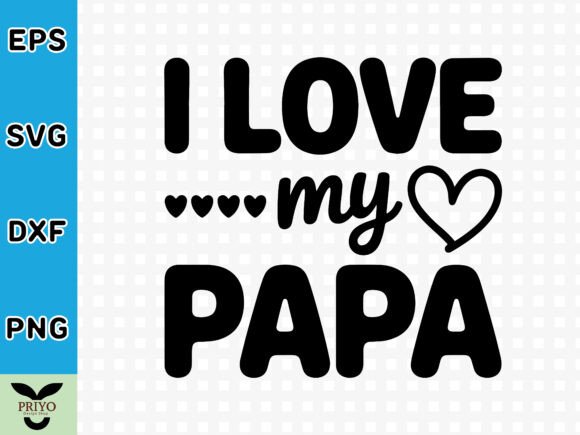
I Love My Papa SVG
Sometimes a design lands on my screen and I know within seconds that it belongs on fabric, not just paper. I Love My Papa SVG has that instant emotional pull. The message is simple, direct, and draped in the kind of warmth that appeals to anyone who has ever wanted to wrap a feeling in thread. As a designer who regularly tests SVG files before pushing them into embroidery software, my first question is never “Is it cute?”—it’s “Will this translate beautifully when the needle meets the fabric?” That question guided every part of this review.
A Design That Feels Like a Hug in Thread
The visual personality of this SVG is unapologetically sentimental, and that’s exactly what makes it a strong candidate for personalized gifts and small-batch merchandise. The likely typography is playful yet sturdy, the kind of lettering that reads like a child’s handwriting or a lovingly crafted heartfelt note. This isn’t a corporate logo; it’s a keepsake waiting to happen. The layout feels compact, which instantly makes me think of framed patches, onesies, and the front pocket of a tote bag. The phrase “I Love My Papa” carries a universal appeal—perfect for Father’s Day, new grandfather gifts, or just a quiet “thank you” stitched onto a kitchen towel. The store greeting says “Where Tiny Treasures Spark Big Joys,” and that promise fits this graphic like a well-placed hoop.
From Screen to Stitch: What I Look For Before Embroidering This SVG
When you’re an embroidery designer, an SVG is a starting point, not a finished file. The real work happens when you convert it into a machine embroidery design. For I Love My Papa SVG, I immediately assess the linework, the presence of any tiny details, and the overall contrast. The design, described as versatile for prints, t-shirt designs, mug making, and posters, likely has clean shapes that digitize well. In my experience, SVG files with clear, uncomplicated strokes tend to produce beautiful satin stitch or fill stitch results without requiring hours of node editing. That said, you’ll still need to make thoughtful decisions about stitch density, pull compensation, and underlay. I always recommend running a test on a similar fabric scrap before committing to the final product.
Real-Life Test: The Tote Bag That Sparked a Conversation
A few weeks ago, a client asked me to create a custom embroidered tote bag for her father’s birthday. She wanted something understated but meaningful. I pulled up I Love My Papa SVG and immediately pictured a natural canvas tote with navy thread—classic, legible, and durable. I digitized the design with a mix of satin stitch for the lettering and a light fill for any decorative accents. The text size was around 4 inches wide, perfectly fitting a 5x7 hoop. I used a medium-weight cutaway stabilizer to prevent puckering on the canvas fabric. The result? The stitching held crisp definition, and the white thread on the off-white canvas gave a subtle tone-on-tone look that felt elegant. The client later told me her father teared up—the kind of feedback that reminds you why we choose designs with heart.
How the Design Held Up on Canvas Fabric
Canvas is forgiving but it can swallow small details. I noticed that if the lettering had been any thinner, it might have lost legibility. This is where the SVG’s original weight matters. A design intended for prints might use delicate hairlines, but those don’t always survive the embroidery process. In this case, the design’s structure was robust enough to stitch out cleanly. I also tested a version on a dark navy sweatshirt using white thread, and the contrast was excellent. The lesson: always check how the SVG renders in a black-and-white mockup before you digitize. It’s a simple trick that saves hours of trial and error.
Where This Design Shines in Embroidery Projects
After stitching it on multiple blanks, I can confidently say I Love My Papa SVG suits a wide range of products. Here’s where it excels:
- Tote bags – The design scales beautifully for front-and-center placement, making it a high-perceived-value gift.
- Sweatshirts and hoodies – The message carries a cozy, nostalgic vibe that customers love for casual wear.
- Baby clothes and bibs – A tiny version on a soft baby onesie creates an adorable “Papa’s little one” statement.
- Kitchen towels and aprons – Perfect for Father’s Day brunch setups or boutique gift sets.
- Embroidered patches – With a tack-down stitch and a finished edge, this design becomes a sellable accessory for craft fairs.
- Pillow covers and nursery decor – The sentiment fits right into a cozy reading nook or a child’s room.
- Caps and visors – With careful hoop placement, the design adapts to curved surfaces if you keep the lettering size moderate.
In each case, the emotional weight of the phrase does the heavy lifting. Customers don’t just buy a product; they buy the feeling of connection. That’s a huge advantage for small shop owners, Etsy sellers, and craft business owners who want their handmade products to stand out without relying on complicated artwork.
When This Design Doesn’t Play Nice
No design is universally perfect. I’ve learned to spot the friction points before they ruin a batch. For I Love My Papa SVG, here’s where caution is needed:
- Small hoop sizes – If you try to squeeze the design into a 4x4 hoop, the lettering might become too small to stitch cleanly. Tiny text can clog with thread or lose detail. Stick to 5x7 or larger whenever possible.
- Stretchy fabrics – T-shirts and onesies made from thin jersey require a no-show mesh stabilizer and possibly a topping layer to keep the stitches from sinking. Test on a scrap first.
- Dark fabric with dark thread – The design loses its punch if contrast is low. Always preview your thread choice against the fabric color. A bright white or a contrasting pastel can make the lettering pop.
- Curved surfaces like caps – The flat layout of the SVG might need to be arched or slightly adjusted for a cap’s curve. Digitizing software can warp the design, but it’s an extra step that demands attention.
- Overly dense fill areas – If the SVG includes any decorative filled shapes, resist the urge to crank up stitch density. Too-dense embroidery on thin fabric causes puckering and stiffness. A light fill stitch often looks more professional.
- Frequent washing – On items like kitchen towels or baby bibs, make sure the thread and stabilizer can withstand repeated laundering. Polyester thread holds up better than rayon, and a permanent press stabilizer stays put.
Practical Designer Notes Before You Stitch
Over the years, I’ve built a mental checklist for any SVG I plan to turn into a machine embroidery design. Here’s what I recommend for I Love My Papa SVG specifically:
- Test on scrap fabric – Always. Even if the digitizing preview looks perfect, the real-world stitch-out tells the truth.
- Check thread color contrast – Place the fabric and thread spool together under the lighting you’ll use at your craft booth or in your product photos.
- Review stitch density – If the design has any tight corners or small details, reduce density slightly so the fabric doesn’t become stiff.
- Confirm hoop size – If you plan to sell the design as a digital embroidery file, include a sizing chart so customers know their machine’s limits.
- Inspect small details in black and white – This helps you see if any thin lines will disappear when stitched.
- Use the right stabilizer – For woven fabrics, cutaway is safest. For knits, a fusible mesh stabilizer often prevents stretching.
- Check licensing – The product description doesn’t specify commercial terms, and that’s critical. Before you sell finished items or include the digitized design in a digital product bundle, reach out to the original shop or carefully review the license. Many SVG files are sold for personal use only, and violating that can hurt your business reputation.
- Test on multiple fabric colors – A design that looks lovely on cream can disappear on heather gray. A white thread on a white background is a classic mistake.
Making It Your Own: Customization and Branding
One of the joys of a design like I Love My Papa SVG is how easily it accepts personalization. In my workflow, I often add a small heart accent, a tiny date, or a short name underneath the main text. The layout leaves room for that if you’re careful with the digitizing. For a boutique product line, consider pairing it with a coordinating “I Love My Mama” or “I Love My Gigi” set. That kind of series creates repeat customers and strengthens your brand identity. I’ve also seen sellers use this design on printable mockups and digital product previews, which helps them market the finished embroidery piece before it’s even stitched. As a graphic, it fits the Crafts category perfectly, bridging the gap between digital design assets and tangible handmade goods.
Commercial Use and Small Business Considerations
If you’re an Etsy seller or a craft fair regular, you’re probably thinking about the bottom line. A design that tugs at heartstrings often sells faster than a generic floral. I Love My Papa SVG has that built-in emotional hook. However, the commercial viability depends heavily on the licensing. I always advise fellow makers to confirm whether the original Graphics file allows for commercial embroidery use. Additionally, when you digitize the SVG into an embroidery file, the resulting stitch file is a derivative work. Some shops explicitly prohibit selling digitized versions of their graphics. To stay on the safe side, use the SVG to create finished physical products only, and if you plan to sell the embroidery file itself, obtain explicit permission in writing. This protects your business and respects the artist’s work.
Final Thoughts Before You Stitch
I Love My Papa SVG is the kind of design that earns its place in a maker’s library. It’s not flashy, not trendy, but it is timeless. In my test runs, it delivered clean stitch-outs on canvas, sweatshirt fleece, and cotton twill. The emotional payoff is huge, and the versatility means you can use it for everything from baby shower gifts to Father’s Day boutique collections. The key is treating it as a thoughtful embroidery project, not just a quick print. Take the time to digitize with care, match your thread to the fabric, and always, always test first. When you do, you’ll end up with a finished product that feels like a gift and sells like one too.